This is a first draft, written as the shape of a winter guide. Opening months, bus timetables, and the names of year-round shops and kitchens are marked [To verify] until we have checked them in person.
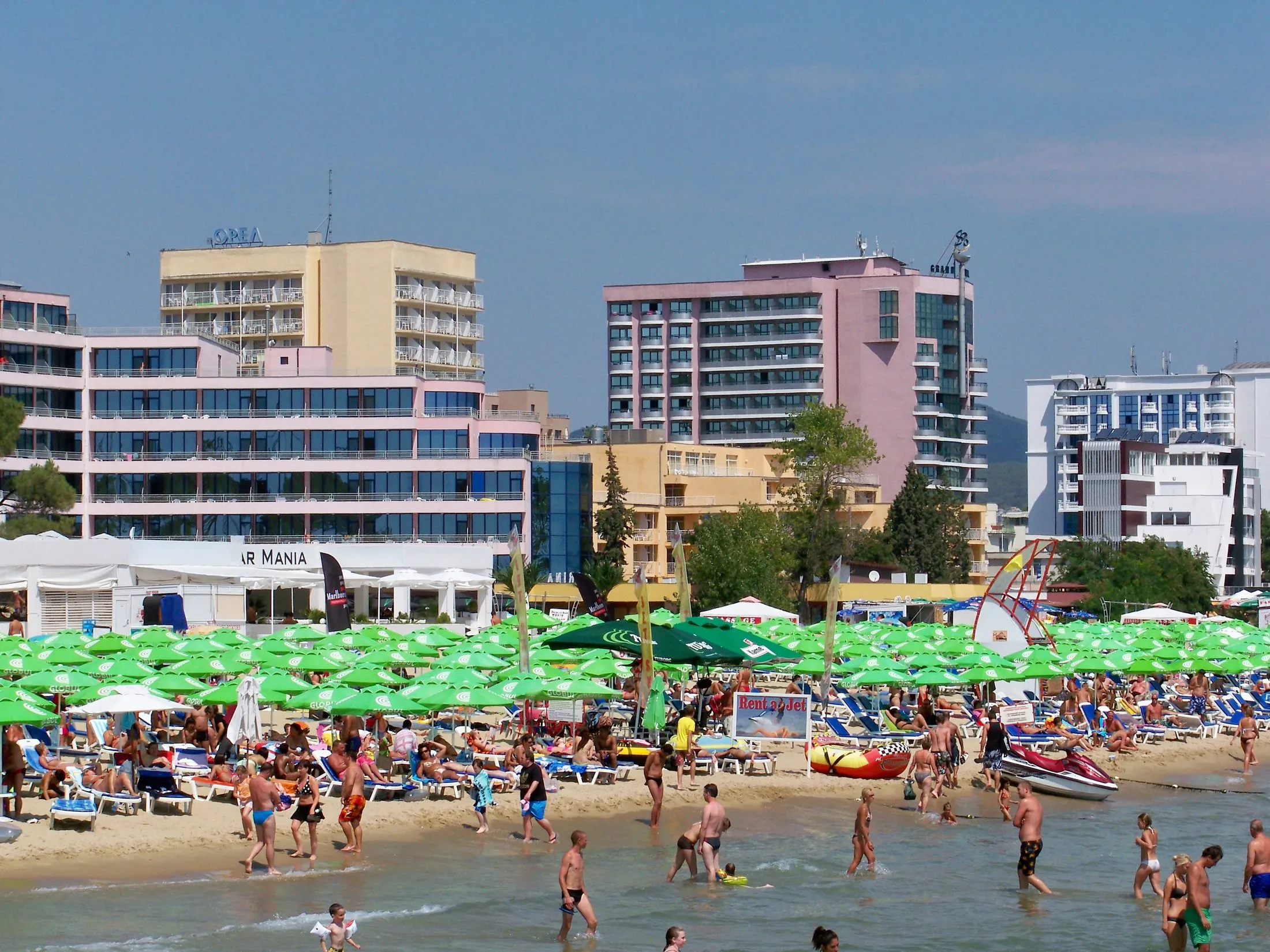
Sunny Beach was built for a short, intense summer. That is obvious in August, when the beach is a solid line of umbrellas. It is even more obvious in January, when many of those umbrellas are in a store-room and whole hotel blocks have their shutters down.
If you arrive in July, this may not matter to you. If you are thinking of a cheap autumn week, a winter month in a flat, or buying a place and coming back out of season, it matters a great deal. The resort does not close completely. It does thin out, and it does so faster than first-time visitors expect.
When the season actually ends
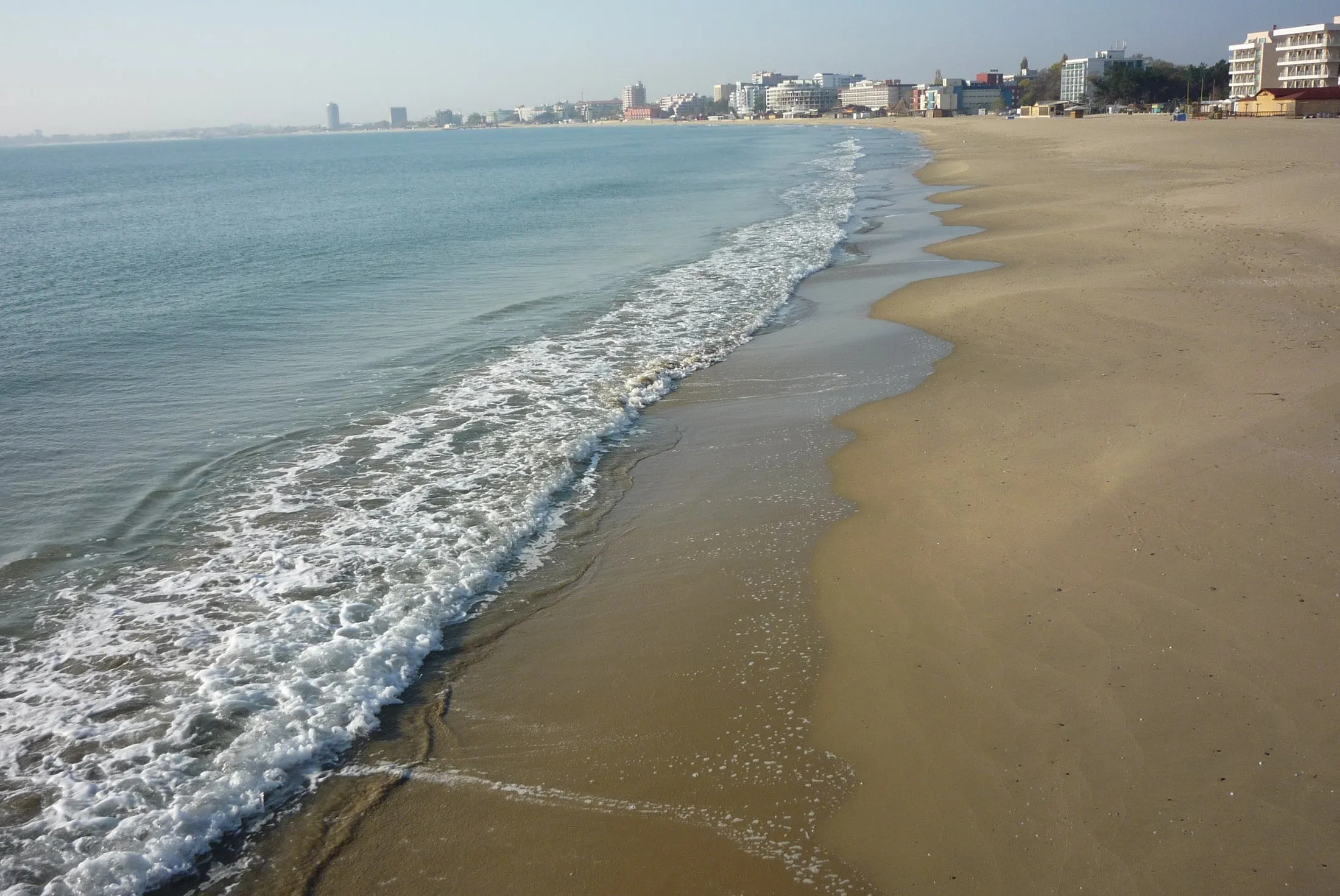
There is no single switch-off date. Beach bars, clubs and seasonal restaurants start to go quiet after the busiest weeks of summer, and a second wave of closures follows once the package flights thin out. Late September is already a different place from mid-August. By late October the beach in the photograph above is closer to the truth than any brochure. [To verify] the pattern for the current year, including whether a mild autumn has been keeping more places open, or whether it has made no difference.
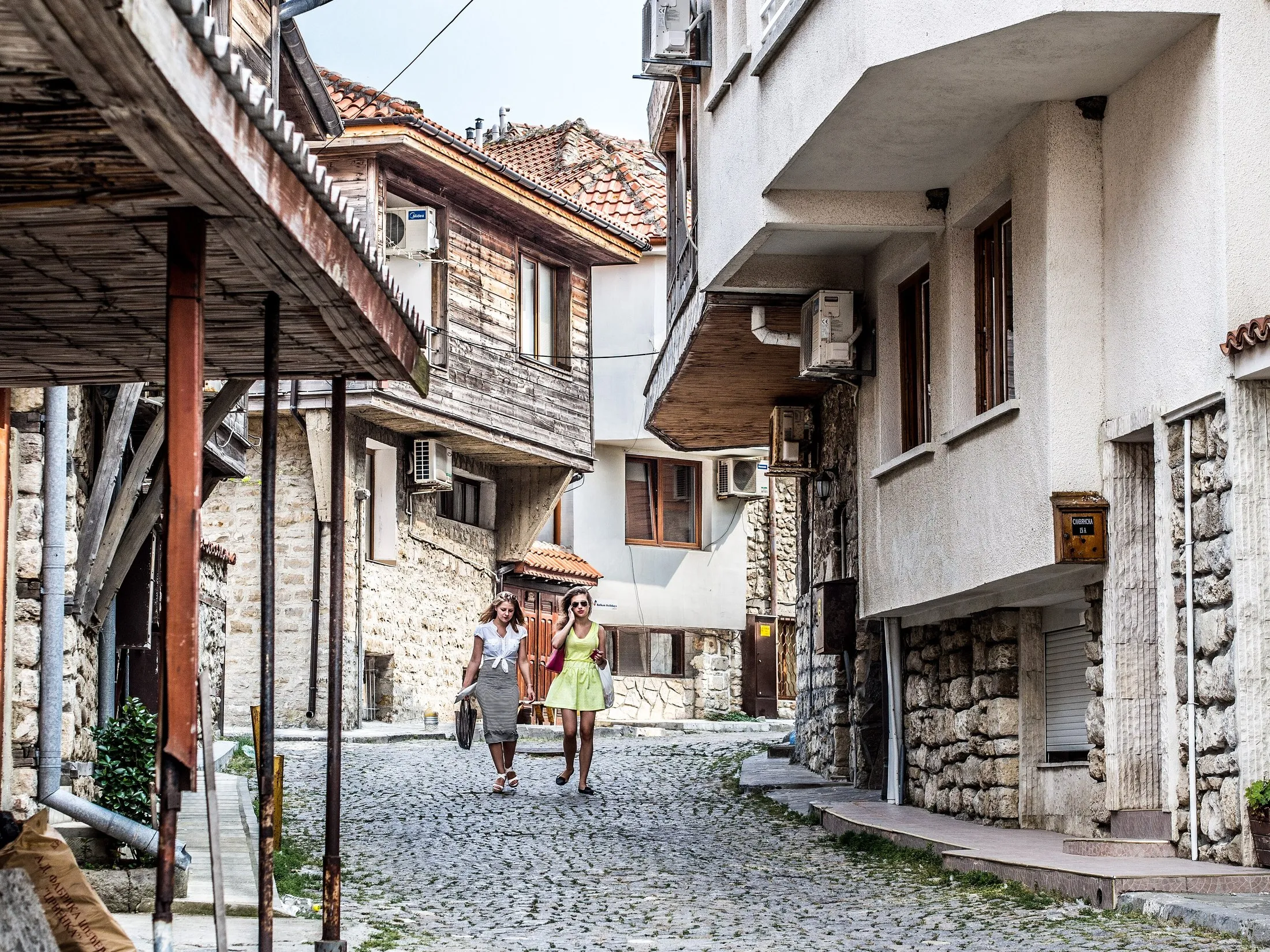
Nessebar, as a town with its own residents, does not empty in the same way. That distinction is useful if you want a coffee or a pharmacy in November and you are staying on a stretch of the resort that has gone to sleep.
What tends to shut
In broad terms, you should assume the following will close or run on much shorter hours out of season:
- Most beach bars and the paid sunbed operations
- Nightclubs and the pavement promoters that feed them
- A large share of seasonal restaurants, particularly those on the front
- Many hotels, including some that look like apartment buildings
- Souvenir shops and the parts of the promenade that exist only for the passing trade
- Some water parks and attractions [To verify] exact closing months
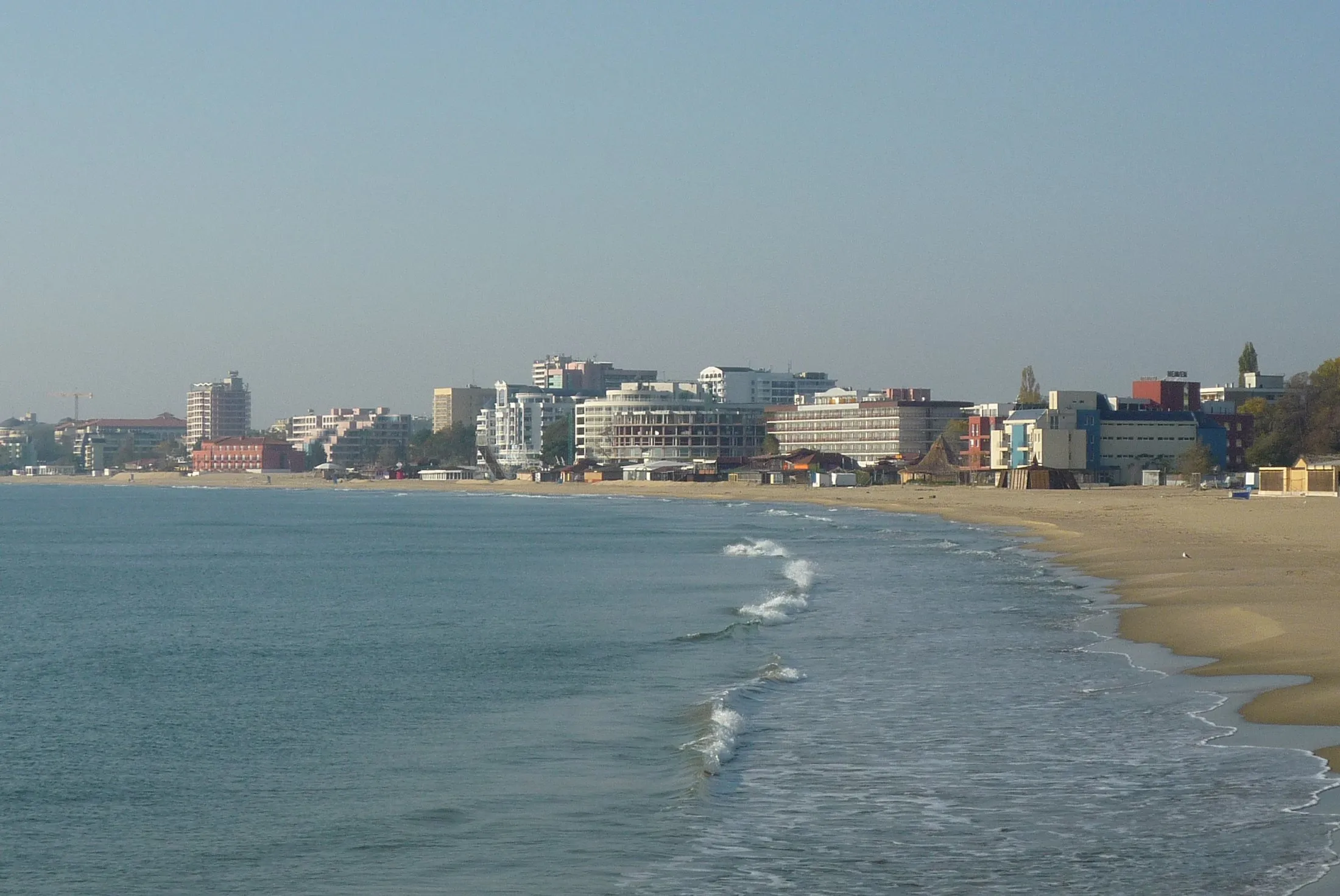
The effect is physical. Streets that were noisy in July can feel unfinished in December: hoardings, parked-up sunbeds, a locked lobby, a wind coming straight off the water. It is not dangerous in itself. It can be bleak if you came expecting a smaller version of summer.
What tends to stay open
A year-round life does exist, just not evenly along the 8 km of the resort. You can usually count on some supermarkets, some pharmacies, and a smaller number of cafés and restaurants that serve the people who actually live here, plus the quiet trade from Nessebar and Sveti Vlas. [To verify] which shops, and which kitchens, we are prepared to name this winter.
Buses between Burgas, Nessebar, Sunny Beach and Sveti Vlas do not vanish, but the timetable shrinks. [To verify] the winter frequency, the last useful evening bus, and whether the airport connection remains usable for a late flight.
Flights themselves are the other constraint. Summer charter routes disappear. If you are coming from abroad in January, you may be flying into Burgas on a thinner schedule, or into Varna, and then making a longer road transfer. [To verify] what is actually flying this winter, rather than what flew last year.
Heating, hot water and insulation in holiday flats are a practical issue, not a romantic one. A studio built for July nights can be a miserable January if the system is weak or switched off in an empty block. If you are renting or buying with winter in mind, ask about that directly. Do not take a summer viewing as proof.
Why some people prefer it
The beach is still there. In clear weather it is a long, serious walk, with room to think, and the water is not a swimming proposition for most people. Nessebar old town in winter is a different visit from the same streets in August — fewer stalls, more stone, more of the town visible. [To verify] museum and church hours out of season.
Costs fall with the crowds, though not always as far as you might hope if only two restaurants are open on your street. The quieter months are also when it is easier to see the place without the performance: which buildings are actually lived in, how far you are from a shop, whether a “five-minute walk to the beach” is still true when the shortcut through a hotel terrace is locked.
For anyone considering a holiday flat, that is the more useful visit. Summer will always sell itself. Winter is the test of whether you would still want to be here when the music has stopped.
The next version of this guide should read like a practical list: a month-by-month sketch, a handful of places that stay open, a bus note, and an honest paragraph about what is simply closed. Until those checks are done, treat this as a picture of the shape of the off-season, not as a timetable.